
The world of market research has entered a period of profound transformation. For decades, the industry operated through traditional and often manual processes, physical fieldwork, CATI centres, door-to-door surveys, spreadsheets, and long data-cleaning cycles. These methods created a foundation that helped businesses understand consumers, but they were also slow, expensive, and limited in reach.
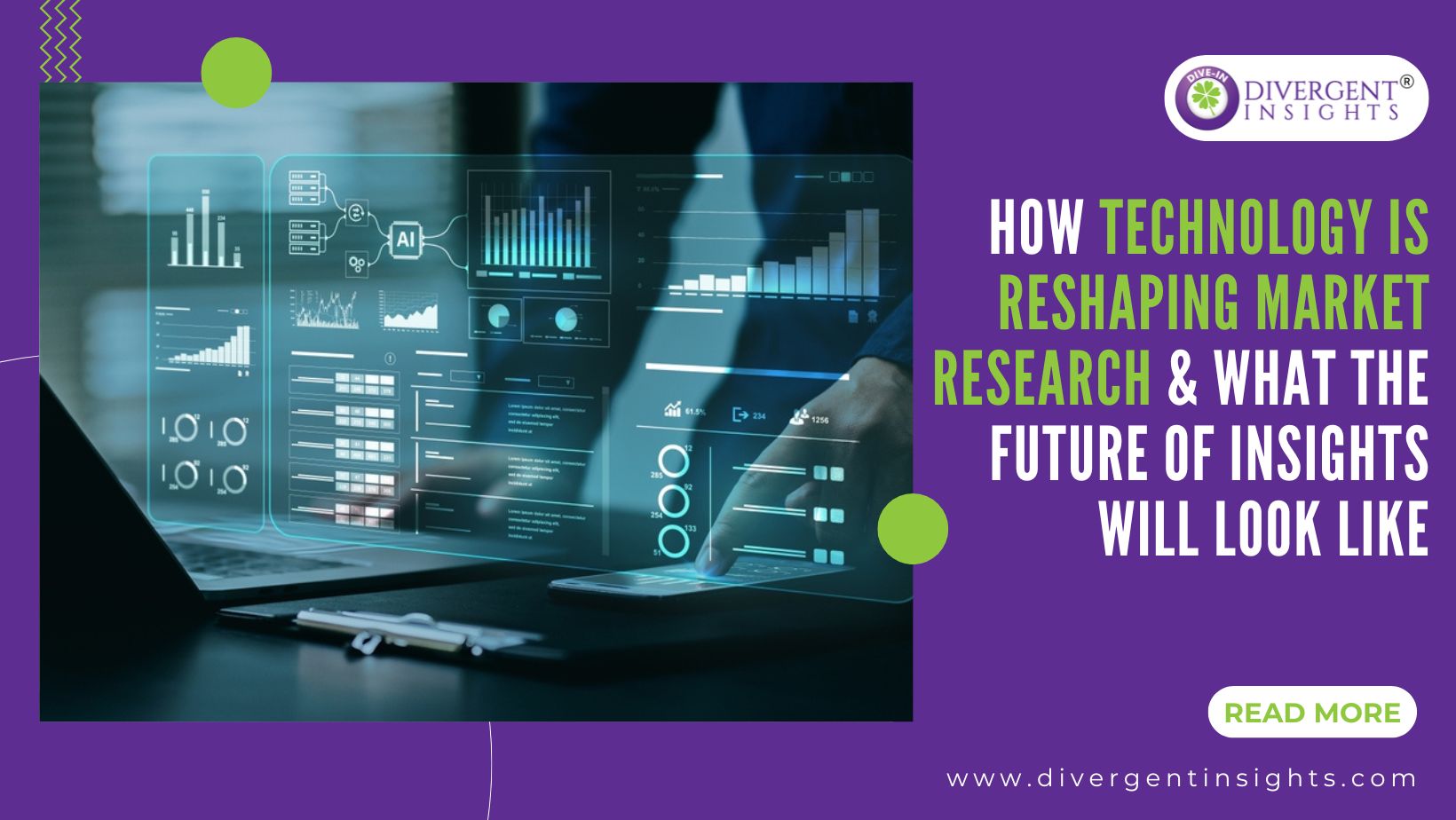
Today, the picture looks dramatically different. Technology is no longer an add-on to market research; it is the engine driving how insights are gathered, validated, and delivered. Digital platforms, automation, AI, and integrated research ecosystems have reshaped the way brands learn about people and markets. As businesses look for speed, accuracy, and global scalability, technology-enabled research is becoming indispensable. At Divergent Insights, we see this shift every day, across clients, industries, and geographies.
The most significant impact of technology is how it has compressed the entire insights lifecycle. Projects that previously took weeks can now be executed in a matter of hours or days. Automation handles tasks that would once occupy entire operational teams, survey programming, audience targeting, sampling flows, device validation, quota management, and data cleaning. This has allowed insight functions to shift from operational execution to strategic thinking, which is where they create the most value.
Data quality has also been elevated through intelligent systems. Modern research platforms come equipped with fraud detection tools, digital fingerprinting, AI-driven validation, geo-verification, logical routing, and smart checks that identify patterns of inattentiveness or duplication. These technologies dramatically reduce the noise that often-plagued manual data validation, ensuring that decision-makers receive insights they can trust. At a time when businesses are making decisions faster than ever, trustworthy data is a non-negotiable requirement.
The global scalability of research has equally expanded rapidly. The rise of online panels and connected sampling networks allows brands to reach respondents across countries, languages, and demographics without the cost and complexity of traditional fieldwork. Multi-country studies, which once required multiple vendors and long coordination cycles, can now be executed through unified online platforms with clear visibility and control. This scalability is especially valuable for global brands and for SMEs looking to enter or test new markets.
Technology has also brought efficiencies that significantly reduce costs. SaaS platforms consolidate multiple research functions survey design, sample sourcing, field operations, reporting, and dashboarding into one ecosystem. This not only reduces the need for multiple vendors but also minimises manual intervention and human error. For mid-sized organisations, this provides access to advanced research capabilities at an affordable price. For large enterprises, it creates standardised, repeatable, and scalable insight systems across regions and product teams.
As the insights industry continues to evolve, several technology trends are shaping what the next decade will look like. Artificial intelligence is becoming central to analytics. AI models can process large volumes of structured and unstructured data from text and audio to behavioural and transactional signals and extract meaning in ways that humans cannot achieve at scale. This is enabling a deeper understanding of consumer motivations, sentiment, and decision-making patterns.
Another major shift is the move toward integrated SaaS ecosystems. Research teams increasingly prefer unified platforms that manage everything from questionnaire building to sampling, data collection, analysis, and reporting. This reduces fragmentation, eliminates redundancies, and creates a more cohesive insight workflow. As more enterprises seek consistency across markets and teams, such unified ecosystems will become the standard.
Mobile-first participation is also shaping the future. With a majority of respondents engaging through smartphones, research must be designed to fit mobile behaviour shorter grids, responsive layouts, intuitive interactions, and device-agnostic logic. The quality of data now depends heavily on the quality of the mobile experience.
Further, API-driven automation is allowing research systems to connect seamlessly with CRM platforms, marketing clouds, loyalty systems, and BI tools. This creates a continuous intelligence cycle where data flows across functions and insights fuel immediate action. The future of research lies not just in generating insights but embedding them into daily business decisions.
Looking ahead, technology will continue to redefine the role of market research. We will see a future shaped by frictionless workflows, predictive intelligence, multi-source data fusion, and deeper behavioural insights. The future researcher will be part strategist, part technologist supported by advanced tools that handle operational complexity while enhancing human interpretation.
At Divergent Insights, we remain committed to building and adopting technologies that push the industry forward. Our goal is to provide organisations with the ability to stay ahead by gathering high-quality global data, accelerating learning cycles, and enabling decisions powered by real-time intelligence. The journey ahead is exciting, transformative, and full of possibility. Technology will not just influence the MR industry, it will define it. And as the shift accelerates, Divergent Insights is ready to help brands harness the full potential of tech-driven insight generation.